National Indigenous Languages Day
 WHEN
WHEN
Fri Mar 31, 2023 12:00 AM - 11:00 PM (MDT)
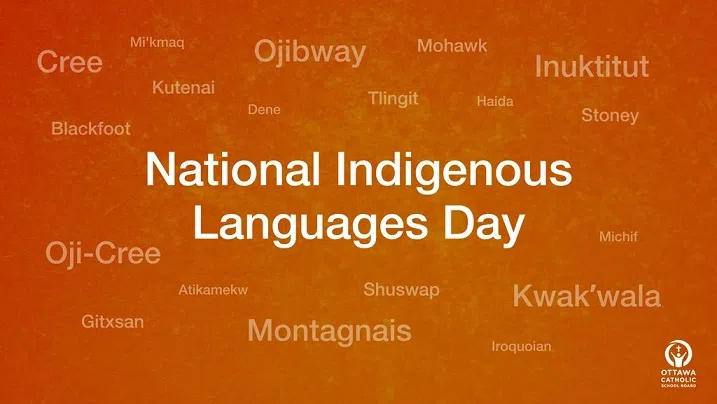
March 31 is National Indigenous Languages Day, an annual observance in Canada since 1993. The day is not only an opportunity to honour the country’s linguistic legacy, but to reflect on efforts to preserve tradition among the country’s many Indigenous and First Nations communities.
Several of Canada’s Indigenous languages, which can be divided into 12 language families, are endangered according to data from the 2021 census. Just more than 15 per cent of the Indigenous population reported being able to hold a conversation in an Indigenous language in 2022. The residential school system, in particular, eroded Indigenous languages by not allowing Indigenous children to speak in their mother tongues.
The loss of Indigenous languages is an ongoing challenge for communities working to express their culture and connect with their history.
In recent years initiatives have emerged to help revitalize Indigenous languages. Recent examples include outcomes for Call to Action numbers 14 and 15 in the Truth and Reconciliation Commission's 94 Calls to Action:
-
Call to Action 14 calls for the creation of the Indigenous Languages Act. In 2019, the government of Canada passed the Indigenous Languages Act.
-
Call to Action 15 calls for the creation of an Indigenous Languages Commissioner. In 2021, an Indigenous Languages Commissioner was appointed and hopes to have a fully running office by Summer 2023.
This National Indigenous Languages Day, let’s celebrate the community-led initiatives that focus on building capacity and sustainability for future generations. Here are just some of the resources currently available:
- Tsuut’ina Gunaha (Tsuut'ina)
- Piikani Paitapiiyssin (Blackfoot)
- Siksika (Blackfoot)
- Ninastako Cultural Centre (Blackfoot)
- Athabasca Tribal Council (Cree)
- Athabasca Tribal Council (Dene)
- Cold Lake First Nations (Denesųłiné)
- Samson Cree Nation (Maskwacis Cree)
- Michif
- Stoney Language Dictionary
- Stoney Nakoda
- KTCEA Elders Speak
- Speak Mohawk
- L'nui'suti
- Makittagait (Inuktitut)


Call or Text CFWE