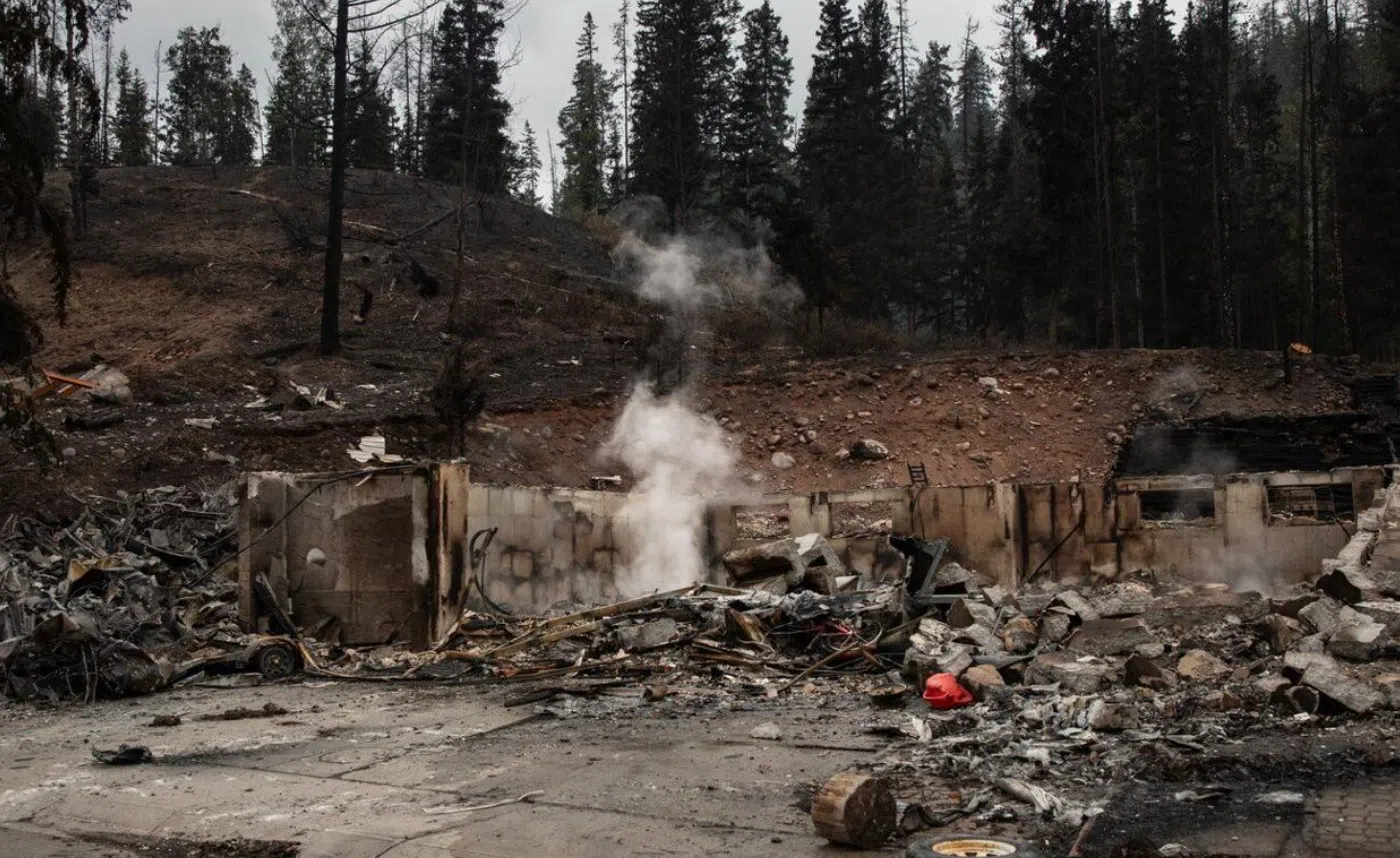
The remains of a home smoulder in Jasper, Alta., on Friday July 26, 2024. THE CANADIAN PRESS/Amber Bracken
Two new reports on last year’s devastating wildfire in Jasper, Alta., confirm the blaze was caused by lightning and accelerated by “tornado-force fire-generated” winds and dry conditions.
The fire, which started as three separate blazes before merging as one, hit town two days after starting and destroyed a third of the community’s structures in July 2024. It forced 25,000 residents and visitors to flee and displaced an estimated 2,000 people.
The reports, commissioned by Parks Canada, say efforts to reduce fuel for wildfires, including prescribed burns, helped mitigate the blaze.
But one of the reports, which looks at how the fire formed and developed, says more burns and other attempts to reduce fuel would have been beneficial, since the fire began in an area south of town that had not burned or been treated in over a century.
“This provided a nearly unbroken corridor for fire spread — excepting the river and highways — that was also aligned to enable wind flow channelling down the (Athabasca River) valley,” it says.
“The extensive fuel continuity enabled unchecked fire growth during the 50-hour window of favourable fire weather following ignition.”
It says another factor aiding the fire’s growth was a mountain pine beetle infestation several years earlier, leaving behind tinder-dry trees.
The favourable fire weather stemmed from minimal rainfall in the weeks leading up to the blaze, combined with “record-high” temperatures in the proceeding days, the report says.
It also says the main column of smoke that towered up over the Rockies, and the amount of fuel the fire was eating up, created its own wind, reaching an estimated speed of up to 200 kilometres per hour.
Just before the fire hit town, the column “collapsed” and blanketed the community with smoke. The report says the collapse also likely “accelerated the pulse of embers into the Jasper townsite.”
The other report, analyzing how the fire travelled through the town, says embers landing on or near buildings caused the first structures to be engulfed.
It says neighbourhood density played a factor in the fire’s spread, as it jumped from one building to the next without having to travel far. Many of the first structures to burn also had roofs made with wood, the report notes.
The two reports come after the town published its own fire report earlier this year, leading to controversy with the province as it said Premier Danielle Smith’s government caused command challenges in the fire response.
Smith demanded an apology from the town over the report, but Jasper Mayor Richard Ireland stood by it, though he said at the time that he was disappointed the report was being used politically.









Comments