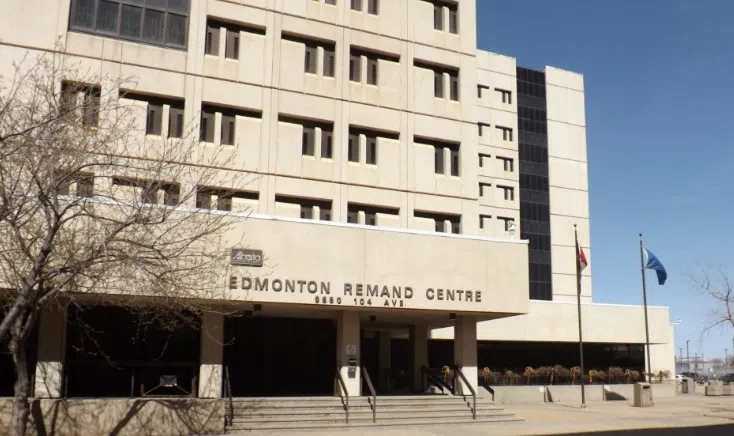
 An Alberta judge says the mental health resources in the Edmonton Remand Centre puts inmates who are at risk for harm in danger without more specialized staff.
This statement comes from Justice Marilena Carminati, who concluded the jail isn’t equipped to deal with the volume of inmates who might be depressed or suicidal. A fatality inquiry was launched after inmate Jonathan Anderson died in hospital on March 14, 2020. Remand guards found him in his cell without a pulse in his cell. He passed away nine days later. He’d been in custody since January. Anderson had asked to see a psychologist and get medication, but didn’t receive treatment.
In a statement issued last month, Carmanati said “Mr. Anderson killed himself less than a month after he unsuccessfully sought help for depression from AHS at ERC,”.
Fatality inquiries are held to help clarify the circumstances of a death and can lead to recommendations for preventing similar deaths. They are not meant to determine legal responsibility. The Alberta Court of Justice heard evidence in Anderson’s fatality inquiry in fall 2022. At the time, there were 16 mental health staff employed by AHS at the remand centre.
40-year-old Anderson was wanted by police for a number of robberies in December 2019 and January 2020 involving firearms. He was arrested on January 14, 2020, after police executed a search warrant at an Edmonton home. It’s reported that about three weeks into his time at the remand centre, he submitted a health service request saying he was struggling with reoccurring feelings of sadness and fear, and he needed help with depression that he reported experiencing as far back as age 12.
Anderson was an Indigenous musical artist and rapper who went by the name Tommy Da.
The day before his suicide attempt, Anderson was taken to an appointment at an Edmonton clinic where he made a “dramatic escape attempt” that required a “significant pursuit” and a series of physical struggles, according to the fatality inquiry report.
When Anderson returned to the remand centre, staff put him on a body scan to check for contraband. It was thought he might have a foreign object in his body, so he was sent to a “dry cell” — a segregated cell with no toilet where inmates suspected of drug use are kept until they have had several bowel movements, to determine if they have any drugs on them.
Dry cells are equipped with cameras, and inmates are supposed to be checked on every 30 minutes. From the cell’s footage on March 5, 2020, it’s shown that Anderson threw food at the camera and ripped part of his inmate coveralls. He was found unresponsive by a guard that afternoon around 3:30 p.m.









Comments