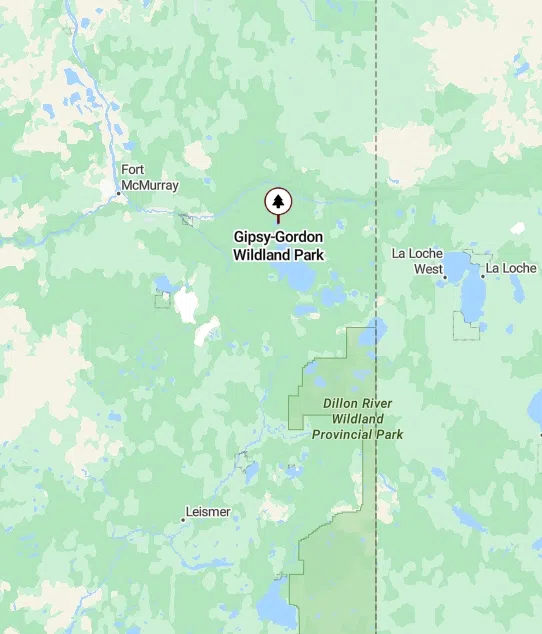
More than 1,800 square kilometres of boreal forest southeast of Fort McMurray will be preserved as the Gipsy-Gordon Wildland Provincial Park. Hunters, fishers, trappers and people enjoying trails will have more untouched forest to explore. The homes of 28 at-risk species, including 18 different birds, will be protected.
“Northeastern Alberta contains trees, lakes and wetlands that are critical habitats for many species of birds, fish and other animals. From songbirds to bumble bees to big game, a variety of large and small wildlife call it home,” read a statement from the Alberta government.
“This area also supports businesses and industries that are vital to the province’s growing economy and is used by local Indigenous communities, trappers and others.”
The park is more than five times larger than the 350 square kilometre Gipsy Lake Wildland Park, which it has absorbed.
The closest point to Fort McMurray is roughly 65 kilometres southeast. It stretches towards the border with Saskatchewan. It is north of the Dillon River Wildland Park, which also borders Saskatchewan and extends just past Winifred Lake southeast of Conklin. That park is more than 1,900 square kilometres.
“This park will help protect our forests, preserve important habitat for wildlife and provide recreation opportunities for Albertans, all while supporting the exercise of Treaty rights by Indigenous Peoples,” said Rebecca Schulz, Alberta’s minister for the environment and protected areas.
The original Gipsy Lake Wildland Park was created in 2000 and became part of the Lower Athabasca Regional Plan in 2012.










Comments