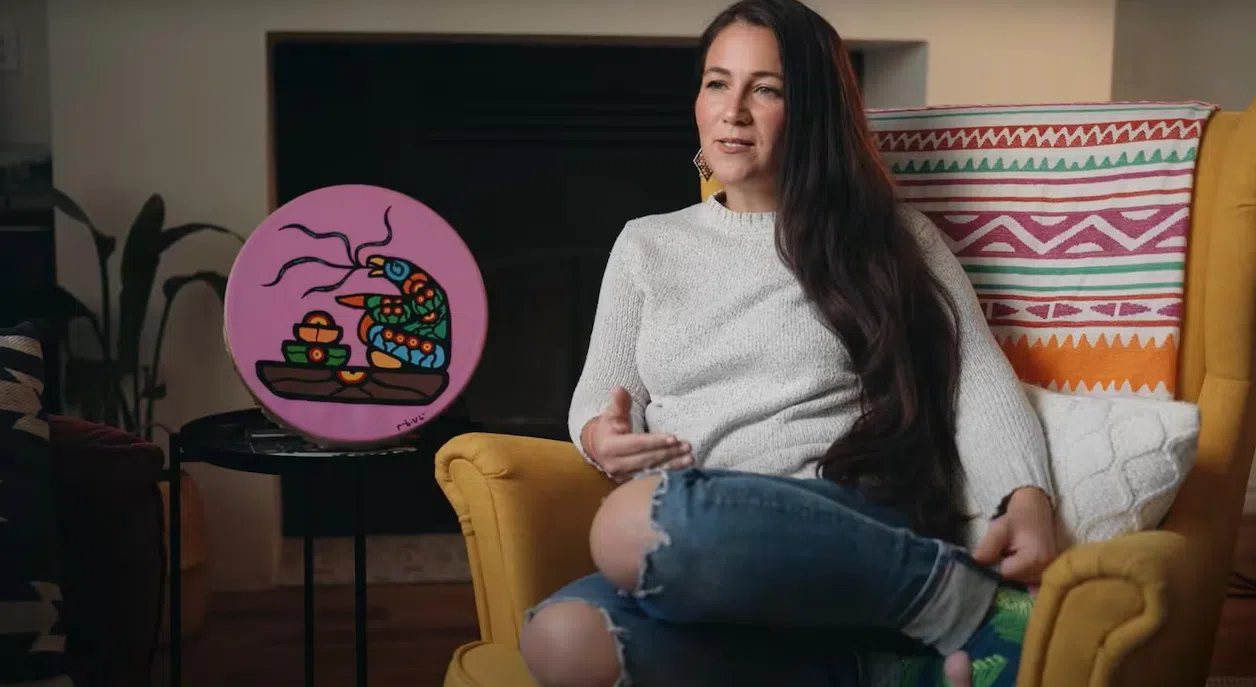
When Indigenous storyteller and strategist Shani Gwin founder of pipikwan pêhtâkwan – an Indigenous owned public relations and engagement agency, she set out to change how stories about Indigenous people are told and who gets to tell them. What began as a desire to create access to media and narrative control has grown into a powerful movement for truth, technology, and representation.
The name pipikwan pêhtâkwan directly translates to ‘eagle bone whistle that is heard loudly’ in nēhiyawēwin (Cree), a reference to a sacred instrument used in ceremony to awaken the ancestors. Fittingly, the company has become a signal – calling attention to Indigenous truths and amplifying voices that have too often been silenced or misrepresented.
Gwin’s newest venture takes this mission into the digital realm. Her team is developing an AI platform called wâsikan kisewâtisiwin, translates to kind electricity in nêhiyawêwin (Cree). It’s a writing tool using artificial intelligence to assist non-Indigenous people in their efforts to write about Indigenous People. Like other plug-in subscription tools that assist writers with grammar and spelling, wâsikan kisewâtisiwin will correct unconscious bias or racism in written material.
“It’s similar to Grammarly,” she says, “but instead of fixing grammar, it flags bias.”
The platform not only reduces the emotional labour often placed on Indigenous people to review and correct materials, it also helps non-Indigenous organizations engage more thoughtfully and accurately.
“It’s about giving autonomy and agency back to us,” Gwin explains. “People can do some of the work themselves and come to us 75% of the way there.”
Beyond bias correction, Gwin hopes the tool will promote mental health and digital safety by allowing Indigenous users to browse without being re-traumatized by harmful content, turning AI into a protective ally rather than a threat.
She also sees this as a pivotal moment for Indigenous communities to shape the future:
“AI doesn’t even know who we are. If we don’t get involved now, it’ll keep making decisions based on colonial data. We have to be part of how it learns.”
Her vision reframes AI as a collaborator, not a replacement for human creativity. “It’s like an askôpios, an Elder’s helper,” she says. “AI learns from us, but it’s not ready to be our advisor yet. It’s still a baby, and we need to be careful what values we teach it.”
With pipikwan pêhtâkwan and wâsikan kisewâtisiwin, Shani Gwin is showing that technology can be a force for truth, empathy, and healing – if it’s built with heart.








Comments