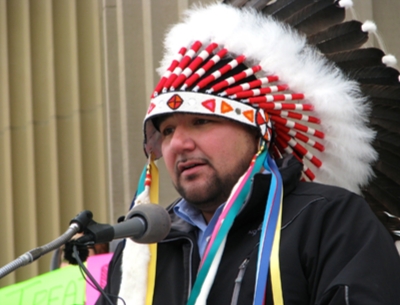
Treaty 8 First Nations Grand Chief Trevor Mercredi
First Nations in Alberta are celebrating the win for the pro-Canada side in Monday’s referendum — but they’re also raising concerns about a shortage of ballots in their communities despite large, public efforts to increase voter turnout.
About three in four Albertans said yes to Confederation on Monday, while about one in four said they wanted the province to hold a second, binding referendum on leaving.
Siksika Nation said that while it’s pleased with the outcome, the polling station in their community was understaffed and didn’t receive enough ballots from Elections Alberta.
“It is unacceptable that First Nations communities continue to encounter barriers to participating fully in Alberta’s democratic processes,” said the statement.
“Our people have fought too long for their democratic rights to be treated as an afterthought. The right to vote must be supported by meaningful and equitable access to the ballot box.”
In Northern Alberta, Treaty 8 First Nations Grand Chief Trevor Mercredi said chiefs worked in both English and their Indigenous languages to ensure voters had the information they needed to participate in the referendum.
“We went to these polling stations not out of fear, but for respect for our treaties,” said Mercredi. “When you defend the treaty, you end up defending the province, you end up defending Canada, you end up defending everybody that’s on treaty lands.”
While chiefs were prepared, Elections Alberta wasn’t, he said, referring to polling stations that opened late and those that ran out of ballots.
“If you listen to Elections Alberta, they would say that they did a fine job of making sure that people could vote, but they haven’t,” he said.
Mercredi said one community had to send their own employees to work at the polling station so that it was adequately staffed, while Fort Chipewyan had to have ballots delivered by helicopter because Elections Alberta didn’t realize the community was so remote.
“We have very serious concerns,” Mercredi said.
Elections Alberta did not immediately respond to a request for comment.
Indigenous people are less likely to vote in elections outside of their communities — a legacy of decades of distrust and tensions between their communities and federal and provincial governments.
Before 1960, First Nations people generally had to forfeit their Indian status in order to vote in an election.
Memories of those days still linger, making some Indigenous people wary of casting a ballot. Others see voting in outside elections as a breach of the unique treaties their communities have with the Crown.
A coalition of First Nations launched a court fight arguing the citizen-initiated petition to hold a separation vote was invalid because the province hadn’t followed through on its constitutional duty to consult First Nations.
In May, a judge agreed and quashed the petition. Soon after, Alberta Premier Danielle Smith announced the government would appeal, putting the lawsuit in legal limbo.
Smith then announced the referendum anyway, citing the hundreds of thousands of Albertans who had signed petitions for one side or the other. Albertans voted on a series of 10 questions that spanned from immigration and the Constitution, to if they should hold a vote to separate from the country.








Comments